
The Silence After the Sky The first sound in Grounded isn’t a trumpet’s fanfare or a jet’s...
 In a candlelit salon shimmering with powdered wigs and powdered tempers, a young poet rises. His verses are not of courtly love or pastoral beauty, but of hunger, injustice, and the thunder of coming revolution. It is Paris, 1789 — and in Umberto Giordano’s Andrea Chénier, poetry itself becomes a dangerous act. Before long, the pen and the guillotine will share the same stage.
Giordano’s 1896 verismo masterpiece, his greatest and most enduring work, arrived in the wake of Cavalleria rusticana and Pagliacci, when Italian opera had turned from gods and kings to the sweat and passion of ordinary lives. Yet Chénier stands apart: a sweeping historical drama as grand as Verdi, with a heart that beats in Puccini’s key of love and loss. It was the opera that catapulted Giordano, then just 29, into immortality — and has since served as a proving ground for the world’s great tenors.
A Revolution in Sound and Soul
The real André Chénier was indeed a poet — an idealist who championed freedom only to be devoured by the Reign of Terror he had helped inspire. Giordano, with librettist Luigi Illica (who also wrote Tosca and La Bohème), transforms this history into high romantic tragedy. From the glittering salons of the aristocracy to the squalid cells of Saint-Lazare prison, the score paints with both fire and tenderness.
Giordano’s music brims with verismo immediacy — bold declamation, sweeping orchestral color, and sudden, cinematic shifts. But woven through its tumult is lyricism of astonishing warmth: Chénier’s “Un dì all’azzurro spazio,” a soaring hymn to truth; Maddalena’s heart-wrenching “La mamma morta,” immortalized by Maria Callas (and, decades later, by Tom Hanks in Philadelphia); and Gérard’s conflicted “Nemico della patria,” which makes revolution itself sing in moral shades of gray.
Plot: Love and Liberty Entwined
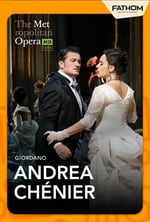 At a glittering party given by Countess di Coigny, the poet Chénier dares to speak truth to privilege — and catches the eye of her daughter, Maddalena. Years later, the world has turned upside down. The Revolution has devoured the aristocracy, and Chénier, once admired, is branded a traitor. Gérard, the Countess’s former servant and now a powerful revolutionary, loves Maddalena as well — and his jealousy becomes the engine of tragedy.
Maddalena’s family has been executed; she lives in hiding, her beauty dimmed but her spirit unbroken. When she and Chénier find each other again, their love becomes a defiant act against terror itself. Betrayed and condemned, Chénier awaits the blade — until Maddalena bribes her way into prison, taking the place of another woman to die beside him. As dawn breaks, they walk hand in hand to the guillotine, their final duet an apotheosis of love that conquers death.
Art Against the Guillotine
In today’s world — where ideals often clash with the machinery of politics, and words can still ignite or destroy — Andrea Chénier feels sharply contemporary. Its central question lingers: can art survive revolution, or does truth always bleed first? Giordano’s answer, like Chénier’s poetry, is both noble and tragic — that beauty, even at its most doomed, can outlast the blade.
When the Metropolitan Opera revived Andrea Chénier in its 2015–16 season (and again in later Live in HD broadcasts), audiences were reminded of its cinematic scope and emotional immediacy. The Met’s 2025–26 Live in HD presentation brings the story back once more, ensuring a new generation can witness this union of history and heartbreak — the poet’s final verse sung in the shadow of the scaffold.
Opera Insight
Did You Know?
The real André Chénier was guillotined just three days before Robespierre — and his final poems were found in his cell after his death. Giordano’s opera uses those verses as inspiration for Chénier’s arias, turning history’s final words into immortal music.
(And yes — when Callas recorded “La mamma morta,” she did it in one take. Revolution has nothing on that kind of power.)
Friends of the Opera is dedicated to making opera accessible, educational, and inspiring for everyone in our community. If you enjoy reading the Friends of the Opera blog, including Arias and Insights, please consider signing up for a membership or providing a donation of support: Learn More